

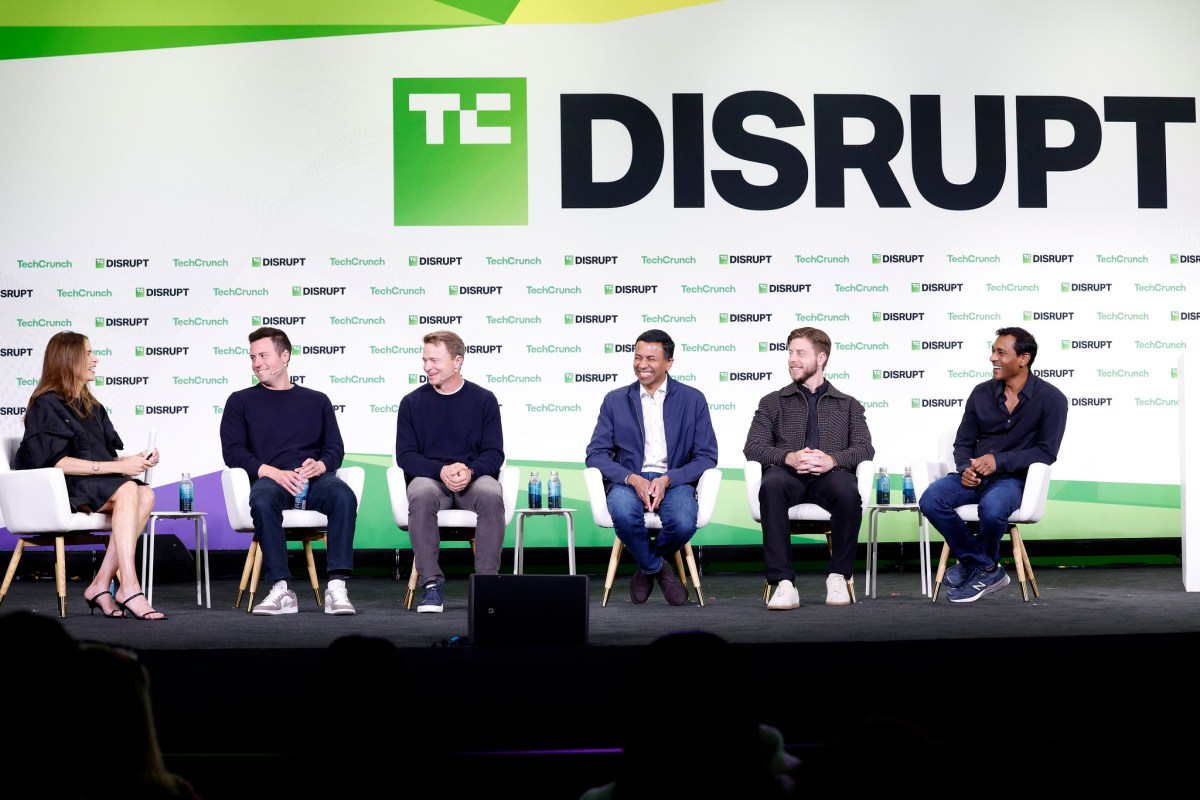

For many years, the unwritten rule of enterprise capital was {that a} agency doesn’t again two corporations that compete head-on. However talking at TechCrunch Disrupt earlier this week, the companions of Benchmark readily acknowledged that the AI increase is straining that rule.
It’s been on the verge of snapping for a while. The towering AI labs OpenAI and Anthropic share dozens of the identical buyers at this level. Then, on the finish of September, Manufacturing unit, a startup that builds an AI agent to put in writing software program, stated it was firing board observer and adviser Chris Degnan for “unethical conduct involving Cognition,” its direct rival and the maker of the Devin coding agent. Manufacturing unit’s CEO alleged Degnan had mentioned a job at Cognition whereas aware about Manufacturing unit’s board-level discussions. Degnan stated he had already resigned and denied sharing something confidential. Quickly after, he introduced he was becoming a member of Cognition as chief income officer. Powerhouse investor Vinod Khosla sided with Degnan on X, blasting Manufacturing unit’s CEO and calling the corporate “a struggling second tier competitor.” Khosla Ventures backs each corporations.
Even Benchmark, a agency whose fame rests on 10-to-15-year partnerships with founders on the earliest stage, stated the outdated rule can not be counted on. Requested at Disrupt whether or not the pact in opposition to backing rivals nonetheless holds as portfolio corporations broaden into one another’s territory, its companions described the conflicts as a matter of necessity, not desire.
“The tough actuality of this world is each firm is evolving in a short time,” stated Eric Vishria. Firms pivot and alter, he stated, and “you will get conflicts, and that’s simply the truth of the present dynamic.”
Vishria stated Benchmark stays dedicated to every founder and retains what it learns confidential, and he downplayed how a lot a VC might go alongside anyway: “We’re not product or expertise consultants.” Seemingly referring to the Manufacturing unit-Cognition dispute, he stated Benchmark has been lucky to not land in “that kind of insane direct battle.” Exclusivity, he stated, stays “actually essential” on the very early stage Benchmark favors. “However issues are evolving. There’s little question about that.”
Chetan Puttagunta stated AI is accelerating the issue. As the price of constructing software program “successfully goes to zero,” he stated, founders are “extremely formidable.” As a result of they now see a “floor space” and need to declare all of it, he continued, “[i]t’s in all probability going to occur extra, the place you begin to run into one another.”
He drew a line between a direct competitor on the outset, which he referred to as “a simple reply,” and a portfolio firm that expands into one other’s turf over time. “That occurs,” he stated.
Peter Fenton referred to as the difficulty “kryptonite” and the agency’s hardest downside. He described a spectrum of how buyers relate to their corporations. At one finish is the co-founder, who would by no means work on a competing firm. On the different is the public-market inventory picker, who can personal a number of rivals as a result of he’s merely allocating capital, not shaping any of them. Benchmark sits nearer the co-founder finish, Fenton stated, and treats transparency as a golden rule. “There shouldn’t be the shock after the very fact.” If a battle does emerge, a founder ought to by no means really feel shortchanged, he added.
Benchmark isn’t declaring the pact useless. On the similar time, when a agency that constructed its title on loyalty says conflicts are coming, founders would possibly rightly marvel who else shall be this candid.
Once you buy via hyperlinks in our articles, we may earn a small commission. This doesn’t have an effect on our editorial independence.
