

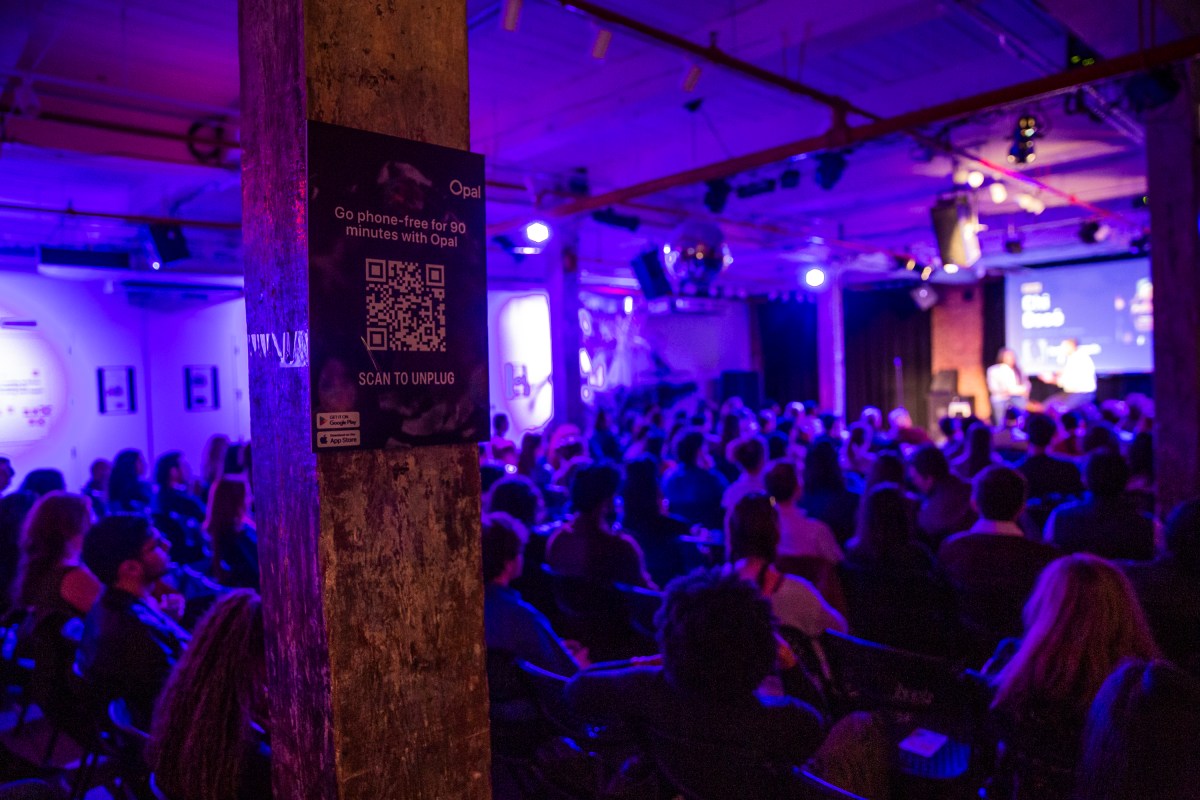

On Thursday night, I slipped on my neon yellow heels and a floral mini gown. It’s New York, so I can put on no matter I need to a midterm election occasion stuffed with media varieties, techies, coverage advocates, and, properly, does anybody else even exist at this stuff? I walked into the dimly blue-lit Brooklyn warehouse and was stunned to see the room already filling up.
Newsreel, the media firm based by former Forbes and Newsweek reporter Jack Brewster, hosted the occasion, and the lineup was heavy-hitting. Kenneth Schlenker, co-founder of the main target app Opal, sat down for a hearth chat about “the state of consideration,” and Aryan Banjan, who constructed the marketing campaign administration software program Barza, gave a midterm forecast. I, in the meantime, was moderating a panel on knowledge facilities.
Brewster mentioned the objective was for folks to “put their telephones away and discuss to one another concerning the election, 5 days out.”
Because the night progressed, nonetheless, one subject consumed almost each dialog: AI, knowledge facilities, and the backlash in opposition to the rising technocracy.
Recently, as a tech reporter, I’ve seen a rising chasm between tech and everybody else. I spend most of my days speaking to individuals who see the advantages of AI, who’re so bold in constructing it and so optimistic that it’s going to succeed that, after I discuss to folks past the tech world, I overlook how ugly all of it appears to them. Outdoors the tech bubble, knowledge facilities and AI have change into such an intense ballot-box problem that they might sway some midterm races on November 3.
A current report from Information Middle Watch discovered that just about $200 billion in knowledge heart initiatives have been delayed, stalled, or blocked within the first half of 2026 as a result of political and group opposition. In the meantime, states like Pennsylvania, Georgia, Texas, New York, and Virginia are contemplating extra guardrails and transparency round knowledge facilities’ fast improvement. Tons of of latest knowledge facilities are deliberate in Virginia alone, a state already nicknamed the “knowledge heart capital of the world.”
A fireplace chat with New York Metropolis Council member Chi Ossé, simply earlier than my panel, set the tone. AI got here up close to the top; Ossé mentioned he doesn’t actually use it. To me, although, he didn’t appear to be for or in opposition to it. He largely emphasised that he want to see tech executives held extra accountable and trillionaires like Elon Musk taxed extra. He described himself as a democratic socialist, however a “legislation and order” one. When CEOs discuss a know-how that would deplete 10% of human civilization, he mentioned, “they need to be referred to as to testify in entrance of Congress.”
My panel was up subsequent. I moderated a dialogue with Maia Woluchem, a know-how and human rights researcher, and Hilary Flint, an environmental and public well being advocate, about knowledge facilities. As I took the stage, I made a decision to get a greater learn on the gang. I requested, “Who right here is pro-AI knowledge heart?” and was promptly booed. Our dialog lined a spread of subjects and feelings. Persons are upset that huge tech firms look like chopping secret deals with native officers to construct billion-dollar knowledge facilities. In some instances, zoning rules make it unclear what’s being constructed till it’s too late to protest.

On the identical time, persons are scuffling with the price of dwelling and doing all the pieces they will to carry onto what’s left of the American Dream, whereas tech leaders discuss AI changing staff, and even humanity itself. Residents really feel they’ve misplaced management over what occurs of their communities, and so they fear concerning the environmental and well being dangers. The panel agreed that knowledge facilities are the bodily embodiment of individuals’s fears and anger towards the tech class and the fast tempo of know-how.
“What’s a life value?” Flint mentioned after I introduced up the advantages that some communities have seen from knowledge heart build-outs. Individuals nonetheless protest, she mentioned, as a result of they “worth their lives slightly bit greater than a short lived test.”
The panel after mine featured NewsNation host Batya Ungar-Sargon; political strategist Morris Katz, who labored on Zohran Mamdani’s marketing campaign; and Vox’s Astead Herndon. They have been alleged to be speaking about the way forward for the Democratic Get together. However as soon as once more, the dialog shifted to knowledge facilities. Ungar-Sargon famous that some labor unions assist knowledge facilities due to the roles they promise. (Experiences present that knowledge facilities create many roles initially, however these jobs are not permanent as soon as building ends.)
“There was once quite a lot of delight in a group within the Rust Belt about very ugly, monumental buildings of their communities as a result of all people labored there,” she mentioned, nodding to an earlier remark I’d made about knowledge facilities being ugly. “They usually knew that constructing represented prosperity for themselves, stability for his or her youngsters, and a future and a bit of the American dream.”

Herndon famous that Vivek Ramaswamy was booed for making an analogous level in Ohio, a Rust Belt state. “I simply need to reinforce the shortage of consent occurring,” he mentioned. “As a result of that’s true amongst Republicans in these locations and I’ve watched it.” Katz was additionally skeptical. “It’s the identical individuals who have taken so many union jobs away,” he mentioned. “The identical institutional powers which have robbed labor and dealing folks of jobs and revenue. Now coming again to basically end the job and take no matter scraps stay.”
Alongside the warehouse partitions, I seen sticky notes answering posted questions, together with “Will we ever be capable of get Large Cash out of politics?” “God, I hope so,” one be aware mentioned.
Individuals rushed the bar when the panel ended, and techno music started to blast. They broke into small teams, the place AI and knowledge facilities have been as soon as once more the subject, this time in additional non-public conversations. I requested Brewster if he was stunned by how a lot of the dialog centered on AI and knowledge facilities.
“It got here up in each dialog on stage, and it was the second most typical subject within the questions folks despatched us after they RSVP’d,” he mentioned, including that it was occurring even in New York, the place knowledge facilities aren’t very seen. “AI has change into an election problem for normal voters,” he mentioned. “In rural communities, the backlash is about feeling changed. In a spot like Brooklyn, it’s extra about who will get wealthy from it.”
Earlier than leaving, I made the rounds, asking folks to call the craziest factor they’d seen in tech this yr. Two tech founders talked about the AI assistant startup Intuition, whereas a non-tech individual named Sam Altman
One other non-tech individual introduced up the rise of deepfakes and AI artwork. AI artwork, she mentioned, is beginning to sign cheapness. That could be why luxurious manufacturers are going the opposite approach: Prada’s vacation marketing campaign options hand-drawn illustrations, and Hermès has been spotlighting artists’ handmade work on Instagram.

On my approach out, I spoke to a software program engineer who mentioned the craziest factor she’d seen this yr was an individual who painted their nails orange for Halloween and was requested if it was a tribute to the Anthropic IPO. I admitted that I, too, had as soon as worn a burnt orange gown and briefly considered myself because the Claude brand.
She later informed me knowledge facilities are popping up in her Southern California hometown, too. Listening to that, I believed for the primary time about how I’d really feel if one popped up in mine. She grew up in a Chinese language immigrant group, the place neighbors are placing indicators of their yards exhibiting dragons choking a knowledge heart.
The indicators have since been translated into different languages, she mentioned.
Whenever you buy by way of hyperlinks in our articles, we may earn a small commission. This doesn’t have an effect on our editorial independence.
