

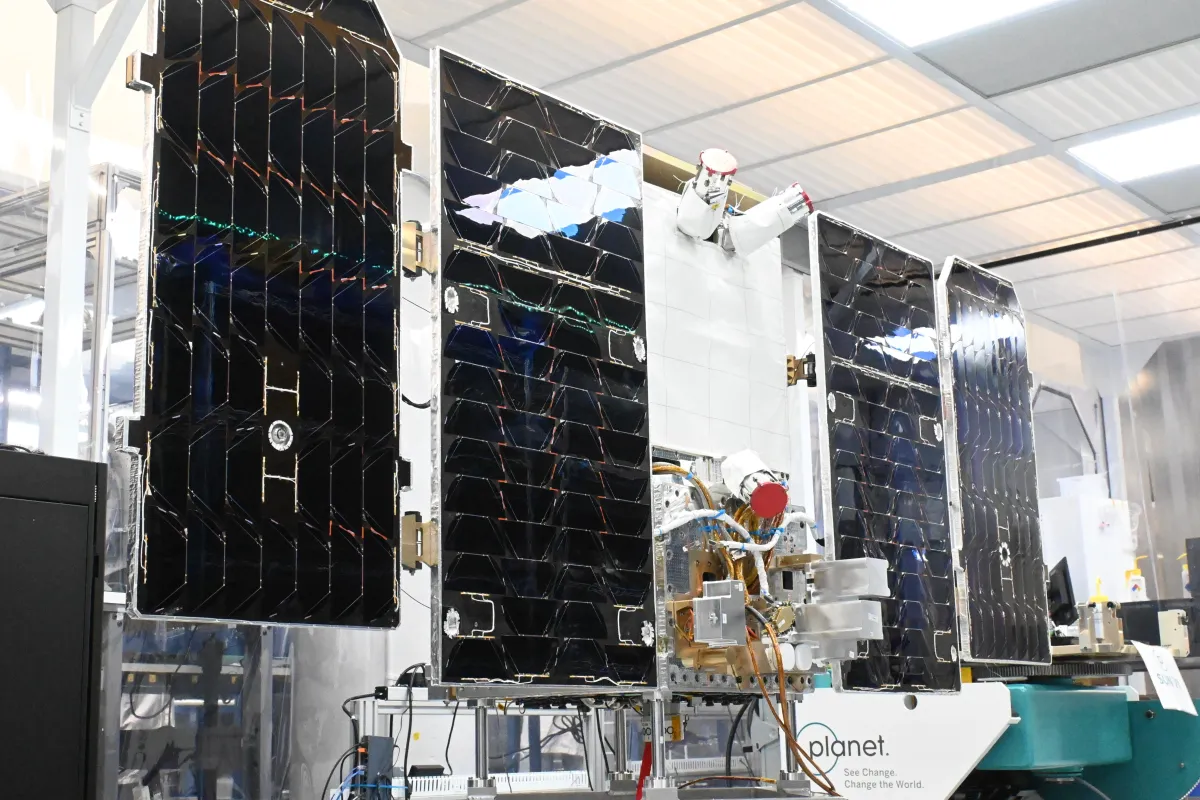

Google Suncatcher’s prototype space data center is on-line and speaking with the bottom after launching earlier this month alongside greater than 100 different spacecraft on a SpaceX Falcon 9 rocket.
The satellite tv for pc, which carries a single Google Tensor Processing Unit (TPU) and generates as much as 1 kW of electrical energy, is meant to pave the best way for future networks of close-flying satellites performing massive inference workloads in orbit. Nonetheless, the ability calls for of the TPU imply it may solely activate for about twenty minutes at a time, complicating the already tough enterprise of space-to-ground communications.
After a commissioning course of that examined out the satellite tv for pc’s subsystems over about three weeks, the spacecraft was able to work. When engineers on the bottom despatched their first immediate this week, they requested the mannequin pre-loaded onto the satellite tv for pc, Google DeepMind’s Gemma 4, to write down a haiku about being in house. And thus:
Blue marble under
Information streams in silent grace
Starlight feeds my core. ✨
Google stated it examined the mannequin with these space-themed limericks (they need to have despatched a poet?) and, maybe extra importantly, the corporate requested the spacecraft to report on the orbital circumstances across the satellite tv for pc.
A spokesperson informed TechCrunch that the satellite tv for pc was working nominally.
The continuing take a look at marketing campaign will look at how the chips carry out underneath thermal stress and within the house radiation atmosphere. Google has extensively examined its TPUs in particle accelerators on Earth, however now must see how radiation’s actual results on their {hardware} in house have an effect on their processor. Radiation may cause “bit flips”—inflicting a saved worth in laptop reminiscence—and that in flip can corrupt knowledge with out triggering typical monitoring instruments.
Testing on the bottom advised the affect of radiation could be minimal for inference workloads and extra of an issue for coaching a mannequin, however now the Google group will get to evaluate these dynamics in actuality, not a simulation.
If the TPU onboard this spacecraft proves succesful, the following step will likely be launching two extra satellites geared up with the superior chips in 2027. These spacecraft will help increased energy era and reveal inter-satellite optical hyperlinks.
Google’s Starcloud challenge is basically alone amongst visions for space-based knowledge facilities in planning on high-speed hyperlinks between the satellites to help coherent distributed workloads; SpaceX’s knowledge facilities are additionally anticipated to make use of laser hyperlinks but additionally to orbit too far aside to share processing successfully. Corporations like Starcloud and Cowboy House count on to carry out inference hundreds on particular person satellites.
Google and SpaceX’s visions are carefully linked. Alphabet, Google’s dad or mum firm, holds a big funding stake in SpaceX. And to launch their orbital knowledge facilities, each corporations would require Starship, the still-in-development heavy-lift rocket on the heart of Elon Musk’s house imaginative and prescient, to be absolutely and quickly reusable.
In a peer-reviewed evaluation revealed earlier this month, Suncatcher researchers estimated that SpaceX would wish to fly Starship 1,800 times to attain the identical learning-driven price reductions it noticed with its earlier automobiles.
Suncatcher is a traditional Google moonshot—the corporate’s focus is on designing infrastructure that will likely be economical within the 2030s. Getting there, nevertheless, could rely on how the remainder of the corporate responds to the pressures and alternatives of AI within the close to time period. Alphabet, Google’s dad or mum firm, noticed its inventory plunge this week after reporting that efforts to insert AI into its search companies are hurting advert income development.
While you buy by way of hyperlinks in our articles, we may earn a small commission. This doesn’t have an effect on our editorial independence.
