


The restricted companions who present the capital to enterprise companies — the “cash behind the cash” — are feeling nice proper now. They’re in uncharted territory in some ways, but in addition probably exceedingly profitable territory.
Usually, LPs sometimes unfold their bets throughout many companies to diversify their very own portfolios. They write checks to rising managers and established ones, to generalist companies and specialists. The purpose is a powerful return, but in addition to reduce threat.
That’s the everyday playbook. However typical is out the window. OpenAI and Anthropic’s valuations have shot up so rapidly that just about everybody has piled into the identical two corporations on the best way up, usually inside the identical enterprise agency, regardless of the longstanding enterprise conference of avoiding investments that battle with each other. Nobody is complaining, both. The LPs I communicate with appear unbothered by this large gamble, given the potential returns; they’re anticipating a bonanza.
However they do see hazard forward, even when they describe this as a “yellow gentle” scenario, and so they’re uneasy about how rapidly VCs are coming again to boost new funds.
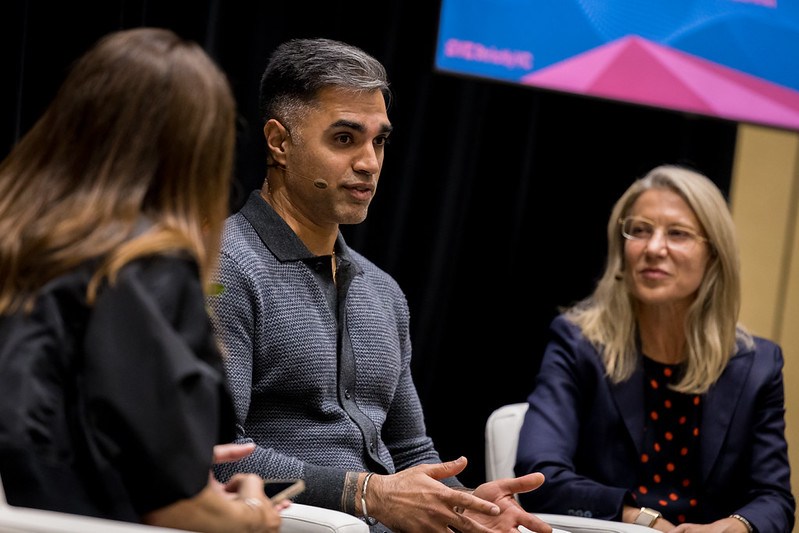
I talked about all of it not too long ago with Beezer Clarkson of LGT Capital Companions, a Zurich-based diversified asset supervisor, and Amit Bhatti of TrueBridge, a Chapel Hill agency that focuses solely on enterprise. This dialog has been edited for size.
These are unusual days — thrilling but in addition scary. How are you feeling about your roles proper now, and your home on this startup ecosystem?
Beezer Clarkson: It’s very busy, however I wouldn’t say it’s scary. There’s a number of change and a number of variables at play. I like enterprise, so I discover the chaos enjoyable. I’ve been doing this for a few a long time, so seeing the cycles makes it much less scary. You respect that this stuff occur, and that we should always benefit from the upside, as a result of typically there’s draw back, and the up is much more enjoyable than the down.
Amit Bhatti: If something, it’s thrilling. Enterprise is typically checked out as a distinct segment, and now that AI is all-consuming, all the eye is on enterprise. This looks like our second greater than it’s like, “Oh gosh, what’s going to occur?” The tempo of investing and the valuations could also be totally different, however actually significant stuff is going on, and all the eye is targeted on this nook of personal fairness.
Your funds all maintain the identical manufacturers now, OpenAI and Anthropic, multiplied throughout nonetheless many funds you again, and your job is to maintain your establishments diversified. How do you concentrate on that? Clearly it’s nice proper now, but when issues turned, it might be much less nice.
Amit Bhatti: Enterprise has all the time been an influence legislation enterprise, so I truly view the focus as a superb factor. If we have been attending to the maturity of certainly one of our funds and there have been nonetheless a lot of tiny positions, one thing’s gone improper. Our funds which might be 10-plus years outdated are beginning to consolidate into a number of names. There’s a number of Databricks, a number of SpaceX, a number of Stripe. On this era of funds, I might hope there’s a number of Anthropic and a number of OpenAI. That’s a characteristic, not a bug. Not each certainly one of these corporations goes to work out, however that consolidation is typical. What’s totally different is how rapidly it’s occurred. I don’t view it as a right away panic sign.
Beezer Clarkson: On the early stage, you continue to see fairly a range of alternative units, and the {dollars} are smaller. It aggregates up into the identical corporations, however early-stage funds clearly aren’t doing the large late-stage stuff, so you will have extra range there, if that’s what you’re on the lookout for.
Funds that invested on four-year cycles have shrunk that to 3, then two, then 18 months. Is the pacing okay, or is it regarding?
Beezer Clarkson: We’re seeing funds come again on one-year pacing, which is quick. The norm was in all probability two to 2 and a half years. Some funds are deploying a lot sooner as a result of they’re taking concentrated, big-check positions. That may very well be a worrisome signal. It may work out, we don’t know, but it surely’s sometimes tougher to do a one-year classic and get it proper.
Amit Bhatti: Related for us. I might have mentioned 24 to 36 months was roughly regular. Now 12 to 18 is just not loopy for a number of the funds going actually rapidly. A variety of funds are bumping up their fund sizes mid-cycle, which is unquestionably uncommon. That’s partly as a result of rounds have gotten so giant. If Anthropic is elevating a large quantum of capital and you set 20% of the fund into it, you’re clearly going to be forward of tempo. Seed spherical sizes have gone up virtually 2x, too, so if you wish to lead, you’re writing 2x the examine. It’s positively a yellow gentle. It offers us a bit little bit of heartburn.
However after we have a look at what these managers truly purchased, the numbers are totally different. The final time we had accelerated pacing, there was a number of investing in zero-revenue crypto moonshots. Now we’re seeing a number of corporations go from zero to $100 million in income, which was completely unparalleled earlier than.
For those who’ve obtained a fantastic supervisor who comes again yearly however the returns are nonetheless on paper, are you able to say “name me subsequent time,” or do you lose your seat on the desk?
Beezer Clarkson: It’s very onerous to go away a supervisor after which come again. It occurs, but it surely’s extra typical to downsize your examine. In 2021, a number of LPs mentioned, “If I used to be going to offer you $10 million, I’ll do $5 million, as a result of $10 million was for 2 years.” In our portfolios, the pacing will get pulled by means of, so we take into consideration our pacing in addition to yours.
Amit Bhatti: Identical right here. We’re constructing out a calendar of after we anticipate to make commitments, so if somebody goes means off that map, we want to ensure the capital is there. You see folks downsize or talk it up entrance. It’s onerous to say you’re sitting it out altogether, as a result of then you definitely’re not dependable capital. That’s additionally why you’re seeing upsizes; managers don’t need to come again and say they’re elevating a complete new fund, so that they bump up the outdated one.
Beezer Clarkson: Folks additionally rotate out of enterprise typically as a result of capital calls hold operating with no distributions coming again, and so they nonetheless have to fulfill working commitments, whether or not it’s the endowment, the hospital, or the muse. That places a number of pressure on these conditions.
LPs like time diversification, but a lot of funds have been raised lately, together with that backed startups at excessive valuations throughout the pandemic. How are these funds doing, and the way would you describe 2026 thus far?
Beezer Clarkson: The 2021 vintages are nonetheless early, 5 years in, however they argue towards doing one-year funds. Some will catch a bit of an AI firm and look wonderful, however your odds of getting it proper in a single 12 months are simply more durable, and the valuations have been excessive.
Amit Bhatti: If I have a look at the final 15 years of our portfolio, I wouldn’t guess on the COVID classic being one of the best one. However a few breakouts will come from it. OpenAI was round in that period, and Cursor began fairly far again, so that they’re in a few of these funds. And liquidity has began flowing. The previous two years have been positively slower, however SpaceX is the headline, Cerebras was an enormous exit this 12 months, there have been a few different IPOs, and a number of M&A. We’re seeing $10 billion-plus M&A exits, a $60 billion one [with Cursor]. Liquidity goes past simply IPOs.
How are your enterprise fund managers fascinated by secondaries? If I have been a VC, I’d have been tempted to take cash off the desk in OpenAI or Anthropic.
Beezer Clarkson: Secondaries have turn into rather more subtle in enterprise during the last, name it, 5 years. It’s localized within the high handful of corporations, but it surely’s rather more prevalent than earlier than, which I feel is sweet, as a result of the ecosystem wants liquidity choices. Enterprise is based on that, and when you wait 20 years for an IPO, that isn’t what structurally all of us thought it may very well be. They’re additionally occurring at a number of ranges now. LPs promote stakes of their GPs, a strip of their portfolio, and the taboo round it’s much less.
Amit Bhatti: It’s the third leg of liquidity now: IPOs, M&A, secondaries. Non-public fairness has all the time had a well-developed secondaries market, and enterprise didn’t. It was sort of a unclean phrase. You have been solely promoting when you have been distressed. Then folks have been holding the bag in 2021 and thought, “I ought to have offered.” Now extra managers use it as a software, and extra judiciously. For those who nonetheless imagine it’s the ability legislation firm, you’re in all probability not exiting the entire place. However when you can promote 20% of your place and return your fund, you need to in all probability do it.
There’s a number of founder promoting and worker tenders — usually very early into the corporate’s “journey.” How do you’re feeling about that?
Amit Bhatti: We have been speaking earlier than concerning the analogy to crypto, the place issues obtained very troublesome partially as a result of workers have been paid in tokens that have been liquid instantly. What’s your motivation to stay round when issues get onerous? So I feel it’s nice that there are worker tenders, particularly for corporations which were round a very long time, like Stripe and Databricks, with a really clear monetary image. For them to supply partial liquidity to workers is completely cheap. However a number of the enforcement falls on the lead buyers. Traders we again have instructed corporations, “We don’t need you to do an worker tender proper now.” These conversations are occurring behind the scenes, and other people have realized some classes from final time. It’s all based mostly on leverage, although. If the founder has unbelievable leverage . . .
Overlook it.
Amit Bhatti: Yeah.
When these corporations go public and workers get liquid, will they turn into companions or rivals to your enterprise managers? These workers have superb networks.
Beezer Clarkson: We’ve seen it a number of instances: when an organization turns into very productive, workers can turn into LPs or GPs themselves. It’s fully doable there’ll be a complete new raft of rising managers backed by folks popping out of OpenAI and Anthropic. It occurred within the Google days. However being an LP means signing up for a lot of thousands and thousands of {dollars} and a multi-decade enterprise.
Amit Bhatti: The actual property half [given the soaring cost of home prices in San Francisco] goes to be robust. However these folks keep within the ecosystem, investing in others, constructing new corporations, beginning new companies. That’s why no different place is taking SF’s place anytime quickly.
Housing prices right here in San Francisco have shot up so quick. Will we worth out the following era of founders, and does the following hub find yourself in New York or someplace else?
Beezer Clarkson: Historical past would argue that the density impact within the Bay Space is a good pull. Possibly it strikes out of San Francisco and again into the suburbs. Again within the day, YC was in Mountain View. New York clearly has its personal very deep tech scene, however there’s such a density right here that it’s been actually onerous to push again towards.
A handful of enterprise funds now lock down a lot of the dedicated capital from restricted companions. Is there a wedge in for rising managers?
Beezer Clarkson: There are nonetheless first-time and rising managers, funds one by means of three, being raised this 12 months, final 12 months, the 12 months earlier than. You continue to want a differentiated standpoint, a purpose for being. Fundraising has gotten tougher, however we see them being funded, and the fund sizes are simply smaller. Fifty p.c of the cash would possibly go to the large funds, but when your common first fund is $25 million to $50 million, there can nonetheless be sufficient of these so as to add as much as $1 billion.
Amit Bhatti: There are folks elevating $5 million or $10 million proper right here in SF, perhaps formalizing their angel investing. A variety of actually well-known funds began with a $5 million fund. It’s a lot better for an rising supervisor to construct the monitor document, show out the thesis, your entry and your judgment with no matter capital you will have, after which fund two can be simpler to boost. For those who attempt to increase $50 million or $100 million on day one, you’re creating a large hill to climb.
Beezer Clarkson: For those who’ve solely angel invested, that’s a special story from spinning out of a platform the place you will have an put in base of LPs who know you. These managers sometimes increase extra.
Are you able to speak about particular sorts of rising managers you’ve backed, and what made you write the examine?
Amit Bhatti: Folks outline “rising” very otherwise. We’ve backed founders who’re nonetheless operating their corporations and investing on the aspect. We’ve backed folks leaving a much bigger agency for one thing earlier. And we’ve backed extraordinarily younger GPs, 22 and 23 years outdated, who’ve actually shut entry to the following era of AI-native founders. They began an accelerator program at MIT, Harvard, and Stanford, and the primary couple of batches had Cursor and Mercor in them. They’re younger, however they’re round an unbelievable density of expertise. The VC job is sourcing, choosing, profitable, and so they did a fairly respectable job of choosing when there was no cash concerned. Success begets success in enterprise, so we have been blissful to offer them a shot.
Beezer Clarkson: There’s rather more flexibility now. I bear in mind a time when an LP wouldn’t fund anyone who had a job and was additionally investing, and individuals are open to that now. I’ve been investing in rising managers, together with established ones, for 14 years, and so they run the entire gamut, from an operator-turned-investor elevating $10 million, to a spinout elevating a number of hundred million [dollars]. It’s attention-grabbing after they’re nonetheless working, as a result of it offers them insights. The trick is whether or not they’re doing what they should do to win the appropriate to be on one of the best cap tables.
Amit Bhatti: Particularly early stage, there’s no one-size-fits-all. You will be part-time, you will be diversified, you will be concentrated. There are extra outs within the deck, if you’ll, for returning one thing that’s small and experimental.
What’s the smallest examine you’ll write to a fund, and the way a lot of a fund will you are taking?
Beezer Clarkson: Given our program, it’s onerous to do lower than $5 million. I’ve typically taken the view that when you’re [representing] an excessive amount of of a fund, there are challenges for the GP going ahead, so I’d need to be not more than 20%. There are conditions the place I’d contemplate extra.
Amit Bhatti: Three to 5 million for us, and occasionally smaller in very particular eventualities. We don’t actually care about focus if it’s the appropriate situation. We’ll do half or all of it. However Beezer’s proper that it’s not superb for the GP, and we inform them up entrance to diversify their LP base. We’ve executed a fund the place we have been half the capital, and the following fund we have been nearer to twenty%, as a result of they did properly.
Whenever you buy by means of hyperlinks in our articles, we may earn a small commission. This doesn’t have an effect on our editorial independence.
